Behind every successful stage performance, there is a powerful and reliable electrical system working silently in the background. Whether it is a large-scale concert, music festival, theater show, corporate event, worship service, or outdoor entertainment project, professional lighting equipment requires a stable power supply to achieve the best performance.
Modern stage productions involve hundreds of lighting fixtures, audio devices, LED screens, special effects machines, and control systems. As the number of devices increases, the requirements for power distribution, cable management, and electrical safety become more important than ever. A small wiring mistake or improper power configuration may cause equipment failure, unexpected shutdowns, or even safety risks.
A professional stage power system is not only about providing electricity. It is about managing power efficiently, protecting valuable equipment, and ensuring every part of the production operates smoothly. From selecting suitable power distribution cabinets to choosing the correct connectors and cables, every detail plays an important role.
Blue Sea Lighting understands the importance of safe and stable power solutions in the entertainment industry. With years of experience in professional stage lighting applications, we provide reliable stage equipment and power solutions designed for concerts, events, theaters, and outdoor performances worldwide.
This guide will introduce the basic knowledge of stage power systems, safe wiring practices, connector selection, and professional solutions to help lighting professionals create safer and more efficient event environments.
1. Understanding Stage Power Basics
The Foundation of Every Professional Stage Production
A stage power system is the foundation that supports all electrical equipment during an event. Unlike ordinary commercial electricity usage, stage productions require higher reliability because lighting fixtures and entertainment equipment often operate continuously for several hours under demanding conditions.
A complete stage power system usually includes:
Main power supply
Power distribution cabinet
Circuit protection devices
Industrial connectors
Power cables
Equipment connection systems
The main power source delivers electricity to the distribution equipment, which then separates the power into different circuits for lighting fixtures, audio systems, LED displays, and special effects equipment.
A well-designed power system helps prevent overload problems and ensures each device receives stable voltage.
For example, a large outdoor concert may include hundreds of moving head lights, LED wash lights, audience blinders, strobes, lasers, and video equipment. Without proper power management, uneven electrical loads can create voltage drops that affect lighting performance or damage electronic components.
Understanding Different Voltage Requirements
Different countries and regions use different electrical standards. Professional stage equipment commonly works with:
110V systems
120V systems
220V systems
230V systems
380V three-phase systems
Before designing a stage power solution, technicians must confirm the local voltage standard and calculate the total power consumption.
For example:
A 400W LED moving head light consumes approximately 400 watts of power. If a stage uses 50 fixtures, the total lighting power requirement can reach around 20,000 watts. Additional equipment such as control systems, effects machines, and LED screens will increase the total demand.
Professional technicians must consider:
Total wattage
Current capacity
Cable length
Voltage drop
Safety protection
Correct calculation ensures reliable operation throughout the event.
2. Choosing the Right Stage Power Distribution Equipment
Why Professional Power Distribution Matters
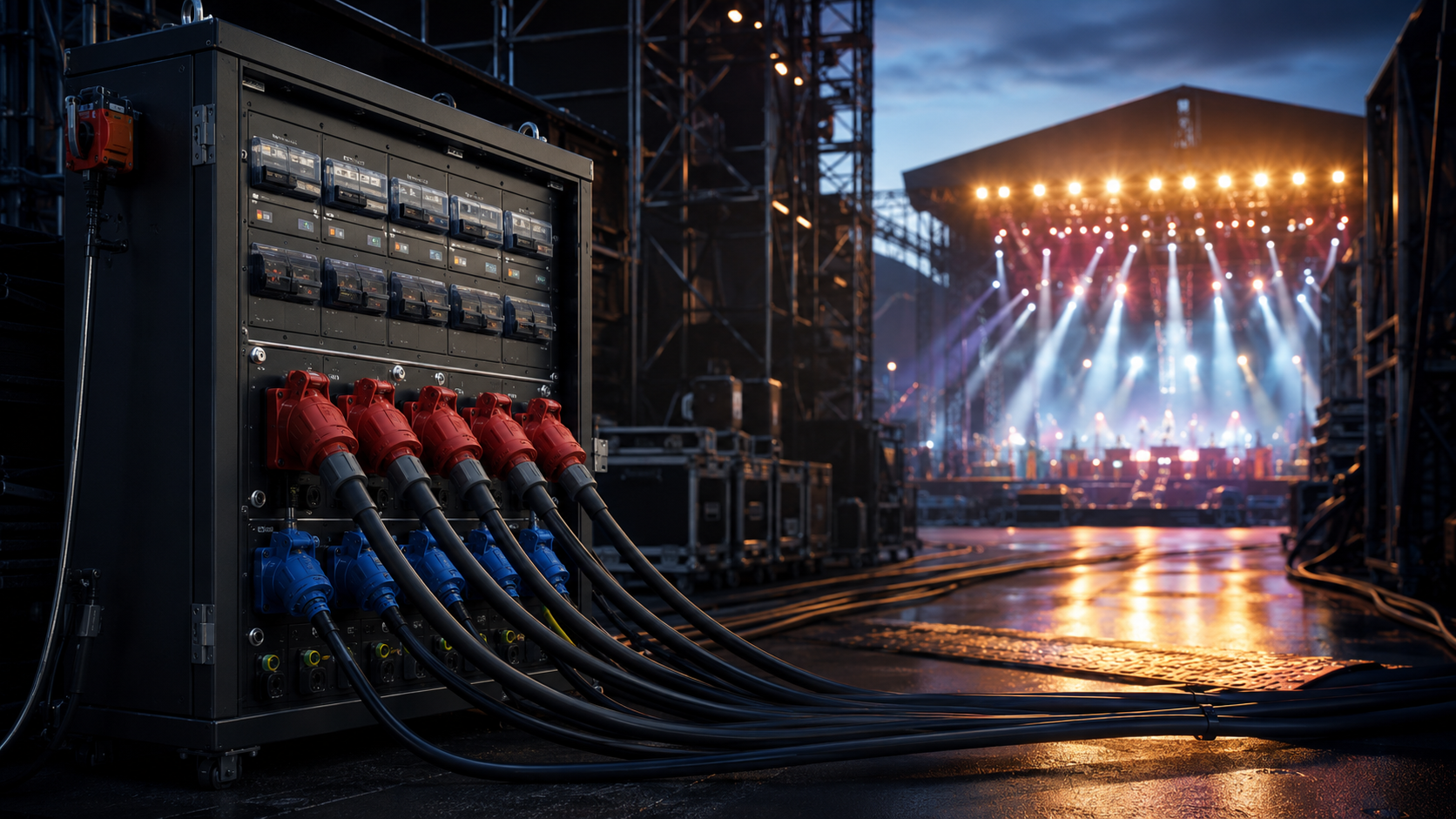
Power distribution equipment plays a critical role in protecting stage systems. Instead of connecting multiple lighting fixtures directly to the main power source, professional productions use power distribution cabinets to divide electricity safely and efficiently.
A high-quality stage power distribution system provides:
Stable power output
Circuit protection
Overload prevention
Easy monitoring
Convenient maintenance
Power distribution cabinets are commonly used in concerts, touring shows, exhibitions, theaters, and outdoor events.
They allow technicians to control different power circuits separately, making troubleshooting easier and reducing downtime.
Important Protection Features
Professional stage power equipment should include reliable protection components such as:
MCB (Miniature Circuit Breaker)
MCB protects circuits from excessive current. When electrical problems occur, it automatically disconnects the circuit to prevent damage.
RCD (Residual Current Device)
RCD provides protection against electrical leakage and helps reduce the risk of electric shock, especially in outdoor environments where moisture may exist.
Ground Protection
Proper grounding is essential for stage safety. It helps prevent electrical faults from reaching equipment surfaces and protects operators working around the stage.
Selecting the Correct Power Cabinet
When choosing a stage power distribution cabinet, professionals should consider:
1. Power Capacity
The cabinet capacity must match the total power requirement of the event.
Common solutions include:
32A power distribution
63A power distribution
125A power distribution
Custom high-power solutions
2. Application Environment
Indoor and outdoor events have different requirements.
Outdoor events require:
Weather-resistant design
Strong housing materials
Waterproof protection
Reliable connectors
3. Connector Compatibility
Different countries and production companies use different connector standards.
Common stage connectors include:
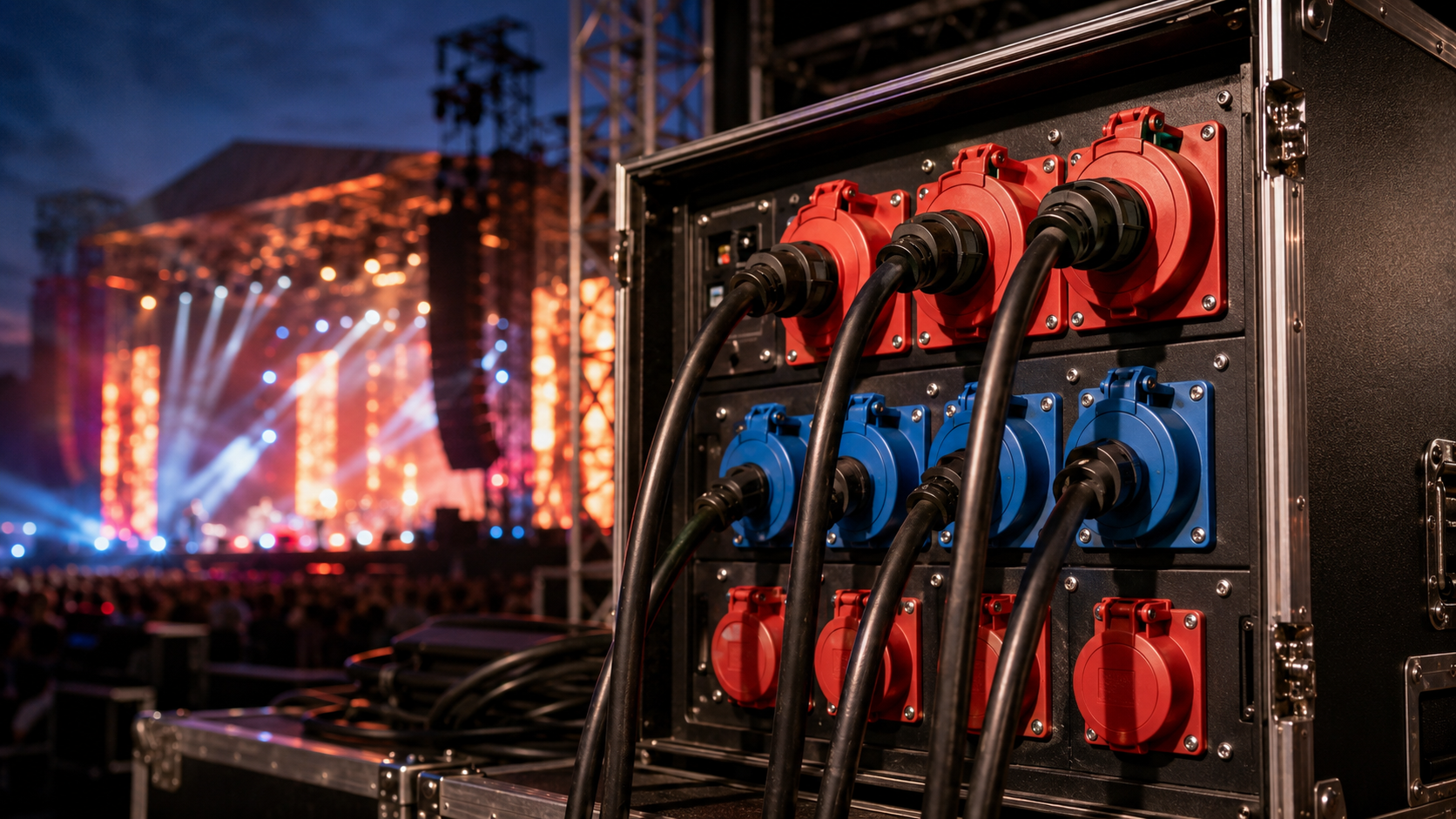
CEE industrial connectors
PowerCON connectors
TRUE1 connectors
Socapex 19-pin connectors
Edison connectors
Selecting compatible connectors improves installation efficiency and reduces connection problems.
3. Safe Wiring Practices for Stage Events
Ensuring Stable Connections and Preventing Electrical Risks
Safe wiring is one of the most important parts of stage production management. Even with advanced lighting fixtures and professional control systems, poor wiring practices can create serious problems during an event.
Stage environments are usually complex. Hundreds of cables may be placed around the performance area, backstage space, and equipment zones. Without proper planning and protection, cables can become damaged, disconnected, or create safety hazards for technicians and performers.
Professional stage wiring should always follow strict safety standards, including correct cable selection, proper installation methods, and regular inspection.
Choosing the Correct Power Cables
The selection of power cables directly affects system stability.
A suitable stage power cable should match:
Voltage requirements
Current capacity
Cable length
Working environment
Equipment power consumption
Using cables with insufficient capacity may cause:
Cable overheating
Voltage instability
Equipment malfunction
Fire risks
For example, high-power moving head lights, LED strobes, and special effects machines require cables that can handle higher current loads. Using professional-grade cables ensures safe operation even during long performances.
Avoiding Cable Overload
One common mistake in stage production is connecting too many devices to one circuit.
Each power circuit has a maximum load capacity. When the connected equipment exceeds this limit, problems may occur.
Professional technicians should:
Calculate total power consumption before installation
Separate equipment into different circuits
Balance electrical loads
Monitor power usage during operation
Balanced power distribution improves equipment lifespan and reduces unexpected failures.
Cable Management and Protection
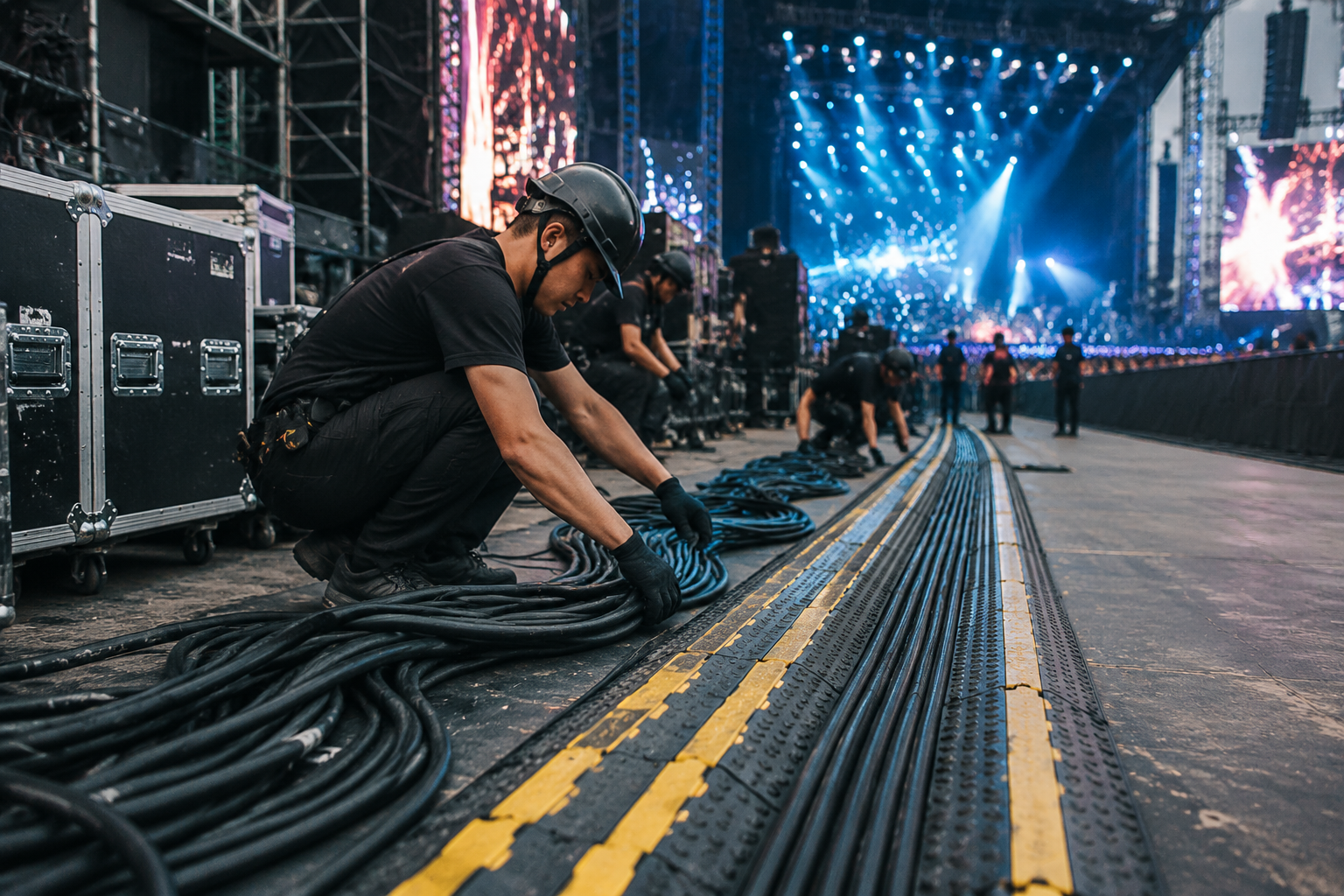
Large events require hundreds of meters of cables. Proper cable management is necessary for both safety and efficiency.
Recommended practices include:
Use Cable Protectors
Cable ramps and protective covers help prevent:
Vehicle damage
Foot traffic damage
Cable crushing
Accidental disconnection
Keep Cables Away From Water
For outdoor events, cables should be protected from rain and moisture.
Water exposure may lead to:
Short circuits
Electrical leakage
Equipment damage
Secure Cable Connections
All connectors should be fully inserted and locked before operation.
Loose connections may create:
Intermittent power problems
Heat generation
Equipment shutdown
4. Understanding Different Stage Power Connectors
Selecting the Right Connection System for Professional Applications
Connectors are an important part of stage power systems. Different productions may use different connector standards depending on location, equipment type, and power requirements.
Choosing the correct connector improves installation speed, reduces connection errors, and enhances overall safety.
CEE Industrial Connectors
CEE connectors are widely used in professional entertainment industries worldwide.
Advantages include:
High current capacity
Strong mechanical design
Reliable locking structure
Suitable for indoor and outdoor applications
They are commonly used for:
Power distribution cabinets
Stage lighting systems
Large event equipment
PowerCON and TRUE1 Connectors
PowerCON and TRUE1 connectors are commonly found on professional lighting fixtures.
They provide:
Secure locking connection
Compact design
Fast installation
Reliable power transmission
Many modern LED moving head lights, LED wash lights, and effect machines use these connectors.
Socapex 19-Pin Power Connection
Socapex 19-pin systems are popular in touring productions and large-scale stage applications.
They allow multiple lighting circuits to be connected through one cable system.
Benefits include:
Faster setup
Cleaner cable management
Reduced installation time
They are widely used in:
Concert tours
Theater productions
Large entertainment events
Choosing Connectors Based on Application
When selecting connectors, consider:
Power rating
Environmental conditions
Equipment compatibility
Installation requirements
A professional stage power system should always use certified connectors that meet safety requirements.
5. Power Safety Tips for Outdoor Events
Protecting Stage Power Systems in Challenging Environments
Outdoor events create additional challenges for electrical safety. Rain, humidity, dust, and temperature changes can affect stage equipment performance.
A reliable outdoor power system must be designed to handle unpredictable conditions.
Waterproof Protection
Outdoor power equipment should have suitable protection levels.
Important considerations include:
Waterproof power cabinets
Weather-resistant connectors
Protected cable connections
Proper equipment placement
For outdoor concerts and festivals, waterproof design helps maintain stable operation even in difficult weather conditions.
Proper Grounding and Safety Inspection
Before every event, technicians should check:
Cable conditions
Connector status
Grounding systems
Power distribution balance
Regular inspections help identify potential problems before they affect the performance.
Managing Power During Bad Weather
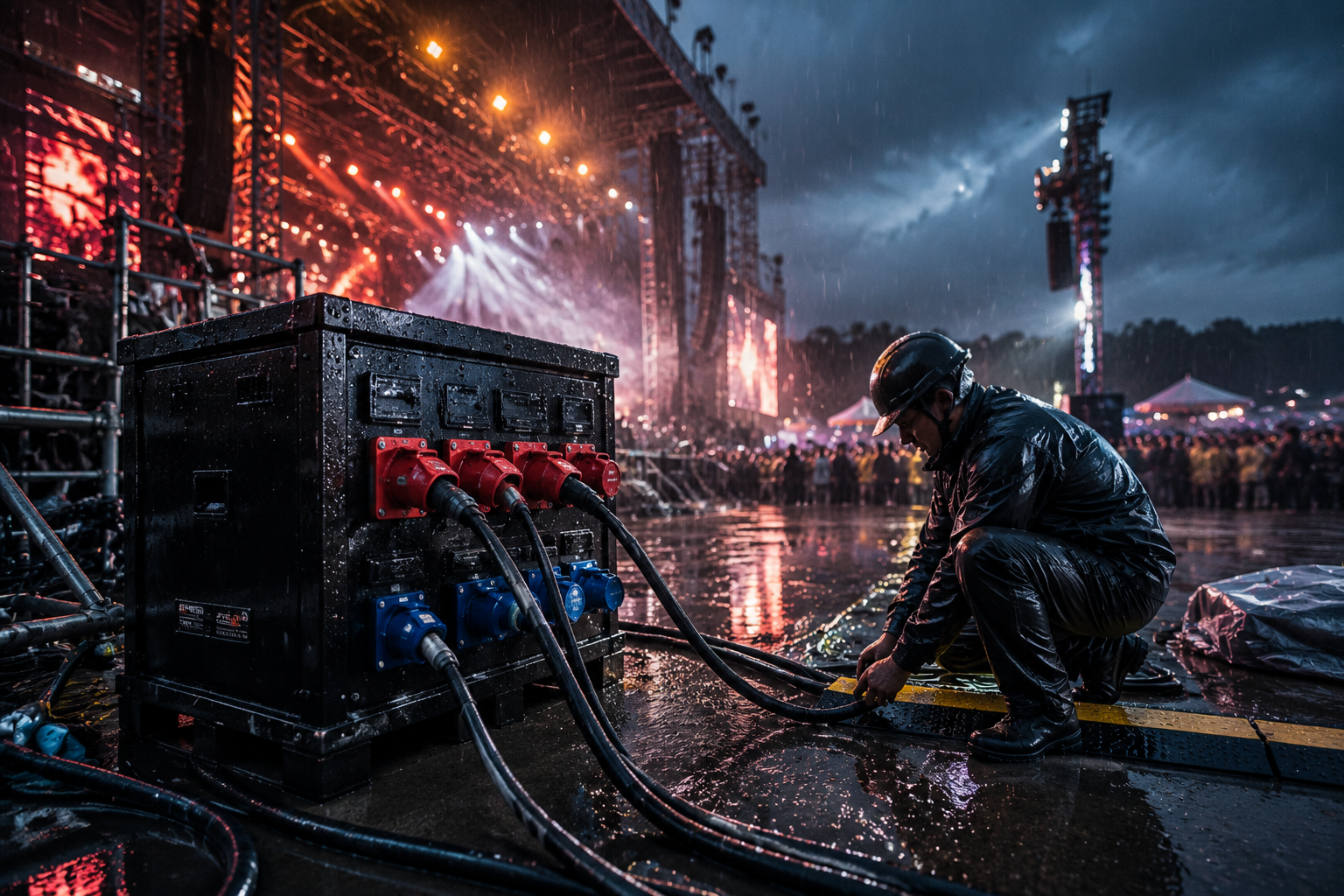
Rain and storms require additional safety measures.
Professional teams should:
Cover power equipment
Avoid placing connectors directly on wet ground
Monitor electrical conditions
Stop operation when safety risks appear
Safety should always be the first priority in outdoor productions.
6. Professional Stage Power Solutions from Blue Sea Lighting
Creating Safer and More Efficient Event Power Systems
With the continuous development of entertainment technology, professional power management has become increasingly important.
Blue Sea Lighting provides reliable solutions for stage lighting professionals, rental companies, event organizers, and system integrators.
Our solutions include:
Professional stage power distribution systems
Industrial power cables
DMX signal solutions
Custom electrical connection solutions
Complete stage equipment support
By combining reliable manufacturing experience with practical event applications, Blue Sea Lighting helps customers build safer and more efficient production environments.
Supporting Global Entertainment Applications
Professional power solutions are widely used in:
Concerts
Music festivals
Theater performances
Worship spaces
Corporate events
Exhibition halls
Outdoor entertainment projects
Every project has different requirements. Blue Sea Lighting works with customers to provide suitable solutions based on power standards, equipment configuration, and application environments.
Conclusion
A reliable stage power system is the foundation of every successful event.
From selecting the correct power distribution equipment to following safe wiring practices, every detail affects performance stability and equipment protection.
Professional connectors, proper cable management, electrical protection systems, and regular inspections help reduce risks and improve efficiency.
For lighting professionals, rental companies, and event organizers, investing in a safe power solution means creating better performances with fewer unexpected problems.
Blue Sea Lighting continues to provide professional stage lighting and power solutions for customers worldwide, helping create safer, brighter, and more successful entertainment experiences.



Blue Sea Lighting is an enterprise with rich experience in the integration of industry and trade in stage lighting and stage special effects related equipment. Its products include moving head lights, par lights, wall washer lights, logo gobo projector lights, power distributor, stage effects such as electronic fireworks machines, snow machines, smoke bubble machines, and related accessories such as light clamps.
Quick Links
For more questions subscribe to our email