As the global entertainment industry continues to expand at an unprecedented pace, sustainability has become one of the most important topics shaping its future. Concerts, festivals, theater productions, corporate events, and architectural shows are all growing in scale and frequency. However, this growth also brings increased energy consumption, higher operational costs, and greater environmental impact.
Among all technical components in modern live production, stage lighting plays one of the most critical roles—and also consumes a significant amount of energy. Traditionally, stage lighting systems relied heavily on halogen lamps, discharge lamps, and tungsten fixtures, all of which generate excessive heat and require large amounts of power. Today, however, the industry is undergoing a transformation toward energy-efficient LED-based solutions.
This article explores how sustainability is reshaping the showbiz lighting industry, the benefits of energy-efficient technologies, and how companies like Blue Sea Lighting are contributing to a greener future for live entertainment.
1. The Growing Demand for Sustainable Entertainment
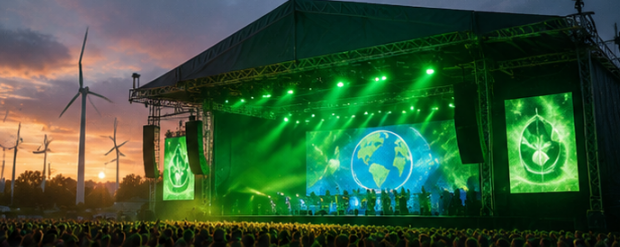
In recent years, environmental awareness has influenced almost every industry, and entertainment is no exception. Large-scale events often consume massive electricity resources, not only for lighting but also for sound, staging, and video systems.
Event organizers, rental companies, and production designers are now under increasing pressure to reduce carbon footprints while maintaining high visual performance standards.
Sustainability in showbiz is no longer just a trend—it is becoming a requirement.
Key drivers include:
Rising global energy costs
Government environmental regulations
Corporate ESG (Environmental, Social, Governance) commitments
Audience expectations for green practices
Technological advancement in LED systems
Lighting manufacturers are responding by redesigning products to deliver higher brightness with lower energy consumption.
2. Traditional Lighting vs LED Revolution
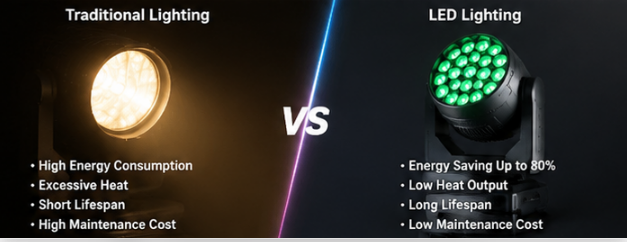
Before LED technology became mainstream, stage lighting relied on inefficient light sources.
Traditional Systems:
Halogen lamps
HMI discharge lamps
Tungsten fixtures
High-power PAR cans
These systems had several disadvantages:
High energy consumption
Excessive heat generation
Short lifespan
Frequent maintenance
Limited color flexibility
For example, a traditional 1000W halogen spotlight produces enormous heat, requiring additional cooling systems and increasing power costs significantly.
LED Revolution:
LED technology has completely changed the industry.
Modern LED stage lighting offers:
Up to 70–80% energy savings
Longer lifespan (20,000–50,000 hours)
Lower heat output
Lightweight design
Advanced color mixing (RGB, RGBW, CMY, CTO)
Intelligent DMX control systems
This transition is not only technological but also environmental.
3. Energy Efficiency in Modern Stage Lighting
Energy efficiency is now a key design principle in lighting manufacturing.
Modern fixtures are built with:
High-efficiency LED chips
Optimized optical lens systems
Smart thermal management
Intelligent power supply systems
For example, a modern 400W LED moving head can often replace a traditional 1200W fixture while delivering even better brightness and beam quality.
This reduction in power usage leads to:
Lower electricity bills for event companies
Reduced generator size for outdoor shows
Decreased carbon emissions
Less heat on stage, improving performer comfort
Energy-efficient lighting is not just environmentally friendly—it is also economically advantageous.
4. Smart Control Systems and Digital Lighting
Another important aspect of sustainable lighting is intelligent control.
Modern lighting systems integrate:
DMX512 control
RDM remote management
Wireless DMX systems
Art-Net and sACN protocols
These systems allow technicians to:
Precisely control brightness levels
Optimize energy usage in real time
Automate lighting scenes
Reduce unnecessary power consumption during idle periods
Smart lighting ensures that energy is only used when and where it is needed.
5. The Role of LED Technology in Sustainability
LED technology is at the heart of the green transformation.
Compared to traditional sources, LEDs provide:
Higher luminous efficiency
Lower voltage operation
Reduced maintenance requirements
No hazardous materials like mercury
Additionally, LED fixtures can easily support complex effects such as:
Beam shaping
Pixel mapping
Color mixing
Dynamic animation
This allows designers to achieve stunning visual effects without increasing power consumption.
6. Environmental Benefits of Energy-Efficient Lighting
Switching to LED stage lighting contributes significantly to environmental protection.
Key benefits include:
Reduced CO₂ emissions
Lower fuel consumption for generators
Less electronic waste due to longer lifespan
Reduced heat pollution in indoor venues
For large music festivals or touring productions, the cumulative environmental savings are substantial.
For example, replacing 100 traditional fixtures with LED alternatives can reduce power usage by several tens of kilowatts per hour.
7. Economic Advantages for the Entertainment Industry
Sustainability is not only about protecting the environment—it also makes strong business sense.
Event companies benefit from:
Lower electricity costs
Reduced transportation weight
Lower cooling system requirements
Longer product lifecycle
Fewer maintenance interventions
Rental companies, in particular, benefit from higher ROI because LED fixtures require less maintenance and have longer service intervals.
8. Blue Sea Lighting and Sustainable Innovation
As a professional stage lighting manufacturer, Blue Sea Lighting is committed to developing energy-efficient and environmentally responsible products.
The company focuses on:
High-efficiency LED moving head lights
Waterproof IP65 outdoor fixtures
Low-power consumption designs
Intelligent control compatibility
Durable materials for long-term use
By integrating sustainability into product design, Blue Sea Lighting helps clients reduce operational costs while achieving outstanding visual performance.
9. The Future of Sustainable Showbiz Lighting
The future of stage lighting is expected to become even more efficient and intelligent.
Emerging trends include:
AI-driven lighting automation
Energy monitoring systems
Solar-powered stage lighting systems
Advanced micro-LED technology
Fully networked lighting ecosystems
In the coming years, sustainability will not just be an option—it will be a standard requirement across the global entertainment industry.
Conclusion
Sustainability in showbiz is transforming the way the entertainment industry operates. Energy-efficient stage lighting is at the center of this transformation, offering both environmental and economic benefits.
With LED technology, smart control systems, and innovative design, the industry is moving toward a future where spectacular visual experiences can coexist with responsible energy use.
Companies like Blue Sea Lighting are playing an important role in this shift, providing advanced lighting solutions that help shape a greener, smarter, and more sustainable entertainment world.



Blue Sea Lighting is an enterprise with rich experience in the integration of industry and trade in stage lighting and stage special effects related equipment. Its products include moving head lights, par lights, wall washer lights, logo gobo projector lights, power distributor, stage effects such as electronic fireworks machines, snow machines, smoke bubble machines, and related accessories such as light clamps.
Quick Links
For more questions subscribe to our email