Introduction
In modern stage lighting, few fixtures are as versatile and visually expressive as the moving head gobo light. Whether used in concerts, theatrical productions, nightclubs, corporate events, or architectural projection mapping, these lights have become a core tool for lighting designers worldwide.
At first glance, a moving head gobo light may look complex, filled with motors, lenses, and electronic components. However, its working principle is based on a few fundamental systems: X/Y axis movement, gobo (pattern) wheels, color mixing systems, and internal control programming.
This article provides a detailed yet easy-to-understand breakdown of how moving head light gobos work, focusing on three key areas:
The mechanical structure: X/Y axis motors and optical systems
Gobo pattern transformation: shake and rotation effects
Manual settings: onboard menu guide for mini moving gobo lights
By the end, you will have a clear understanding of how moving gobo lights create dynamic visual effects that transform any stage into an immersive environment.
1. Basic Structure of Moving Head Gobo Lights
To understand how a moving head gobo light works, we must first break it down into its core components.
1.1 The Moving Head System (X/Y Axis)
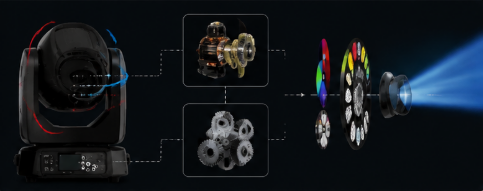
The most recognizable feature of a moving head light is its ability to rotate freely in space. This movement is controlled by two precision stepper motors:
Pan (X-axis movement): Left and right rotation
Tilt (Y-axis movement): Up and down movement
These motors allow the fixture to position its beam anywhere within a defined range, typically:
Pan: 540° or continuous rotation
Tilt: 270° or more
The motion is extremely precise because it is controlled digitally via DMX signals or internal programs.
Why X/Y Movement Matters
Without X/Y movement, a gobo light would act like a static projector. The ability to reposition light beams dynamically is what makes moving head lights essential for modern stage design.
It allows lighting designers to:
Track performers across the stage
Create sweeping aerial effects
Synchronize movement with music beats
Build dynamic storytelling visuals
1.2 Optical System and Gobo Wheels
Inside a moving head gobo light, light passes through a complex optical system:
Light source (LED, discharge lamp, or laser module)
Reflector and collimation lenses
Color wheel or CMY mixing system
Gobo wheel (pattern wheel)
Focus lens system
What is a Gobo?
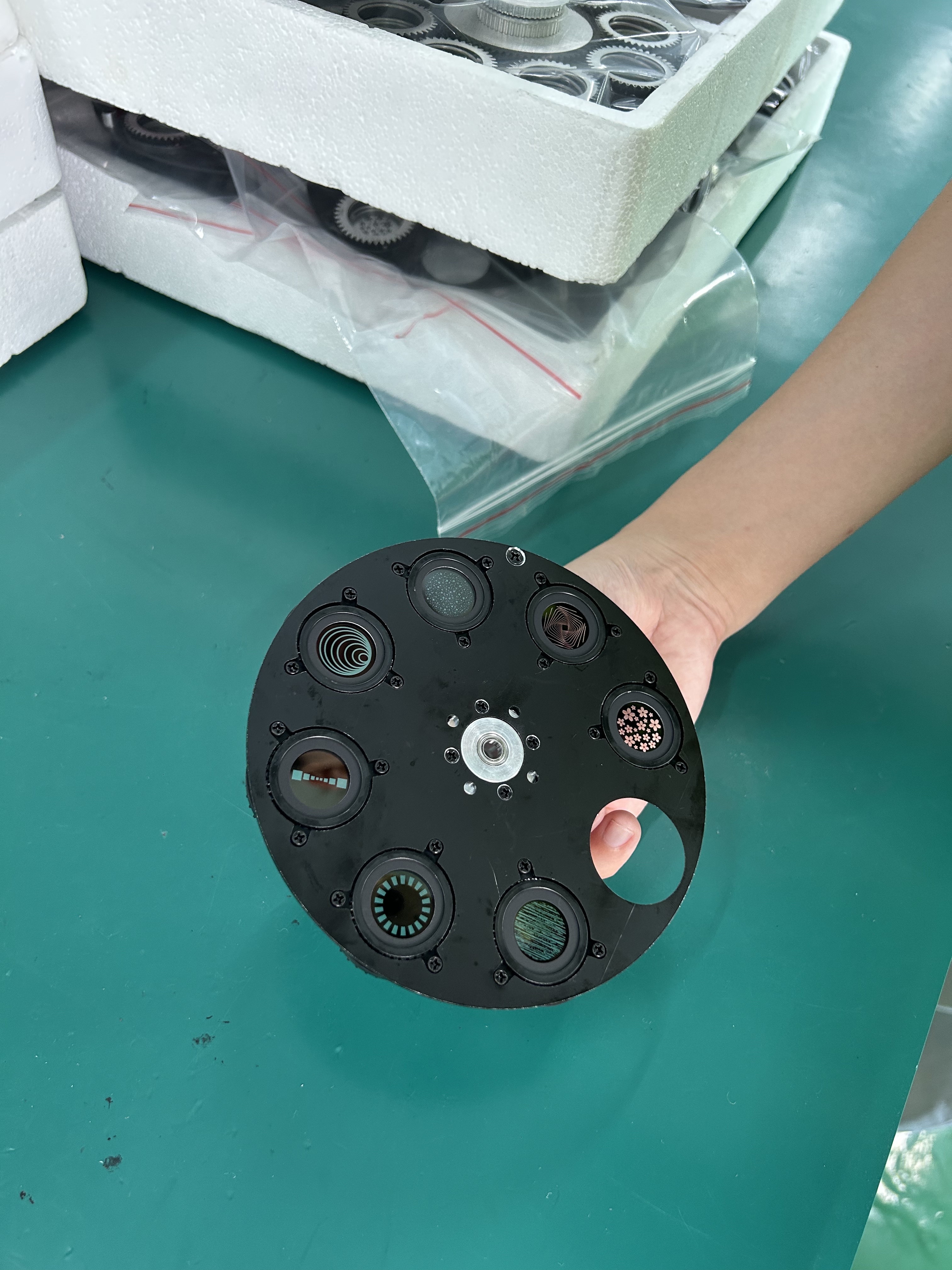
A gobo (GOes Before Optics) is a small patterned stencil placed inside the fixture. When light passes through it, the pattern is projected onto surfaces like walls, floors, or fog.
Common gobo patterns include:
Geometric shapes
Logos
Abstract textures
Nature elements (fire, water, leaves)
Custom brand logos
This is why moving head light gobos are widely used in branding events and concerts.
1.3 Color System Integration
Modern moving head gobo lights often include:
Color wheel system (fixed colors)
CMY color mixing (cyan, magenta, yellow)
CTO correction (color temperature adjustment)
RGB LED mixing (in compact models)
These systems allow designers to combine color with gobo patterns, creating rich visual compositions.
For example:
Blue gobo + slow rotation = calm atmosphere
Red gobo + fast shake = intense energy
White gobo + zoom = spotlight effect
2. Gobo Pattern Transformation: Shake and Rotate Effects
One of the most visually impressive features of a moving gobo light is its ability to transform static patterns into dynamic motion.
2.1 Gobo Rotation (Rotate Effect)
Gobo rotation refers to the continuous spinning of the pattern wheel.
Visual Characteristics:
Smooth circular motion
Direction control (clockwise or counterclockwise)
Adjustable speed
Use Cases:
Creating hypnotic background effects
Simulating rotating fans, water, or fire
Enhancing rhythm in music performances
For example, a rotating star gobo can simulate a night sky in motion, while a rotating spiral pattern creates a psychedelic visual effect.
2.2 Gobo Shake Effect
The shake effect is a rapid micro-movement of the gobo pattern.
Instead of smooth rotation, the pattern vibrates quickly within a small range.
Visual Characteristics:
Fast jitter movement
High energy feel
Strong visual impact
Use Cases:
Music drop moments in EDM concerts
Explosion or impact simulation
Emergency or alarm-style effects
For example:
A “broken glass” gobo with shake creates dramatic tension
A flame gobo with shake simulates fire flicker
2.3 Combining Shake + Rotation
Advanced lighting design often combines both effects:
Slow rotation + light shake = natural movement (wind, water)
Fast rotation + heavy shake = chaos or explosion effect
Alternating modes = storytelling transitions
This is where moving head light gobos truly shine, allowing designers to create cinematic-level lighting environments.
3. Mini Moving Gobo Lights: Manual Settings Guide
Mini moving gobo lights are widely used in bars, small stages, mobile DJs, and home parties. Despite their compact size, they still include powerful features.
3.1 Onboard Menu Overview
Most mini moving gobo moving head light manual systems include a small LCD or LED display with buttons such as:
MENU
UP
DOWN
ENTER
Through this interface, users can configure:
DMX address
Auto mode
Sound activation mode
Master/slave settings
Reset functions
3.2 Setting DMX Address
DMX control is essential for professional setups.
Steps:
Press MENU
Find “d001” or “Addr”
Use UP/DOWN to set address (e.g., 001–512)
Press ENTER to confirm
This allows multiple lights to be controlled individually or in groups.
3.3 Auto Mode Settings
Auto mode runs built-in programs without external control.
Typical settings:
Auto Run Speed (SP01–SP99)
Program Selection (Pr01–Prxx)
Use cases:
Plug-and-play events
Small venues without DMX controllers
Background ambient lighting
3.4 Sound Activation Mode
Sound mode uses an internal microphone to detect music beats.
Settings include:
Sensitivity adjustment
Mode selection
When activated:
Lights move according to bass rhythm
Gobo patterns change with sound intensity
This is especially popular in DJ environments.
3.5 Master/Slave Configuration
This function allows multiple units to synchronize.
Master unit: sends signal
Slave units: replicate movement
Steps:
Set one unit to “Master”
Set others to “Slave”
Connect DMX cables
Result: perfectly synchronized lighting effects.
3.6 Reset and Calibration
If the fixture behaves incorrectly:
Use “Reset” function
Recalibrate pan/tilt motors
Restore factory settings
This ensures long-term stability.
4. Practical Applications of Moving Head Gobo Lights
4.1 Concerts and Live Shows
Dynamic beam movement
Audience scanning effects
Beat-synchronized patterns
4.2 Nightclubs and DJs
High-energy gobo shake effects
Fast rotation patterns
Sound-reactive lighting
4.3 Theatrical Productions
Scene storytelling with gobo shapes
Mood transitions
Background projection
4.4 Corporate Events
Logo projection using custom gobos
Brand reinforcement
Stage decoration
5. Advantages of Moving Gobo Lights
High visual flexibility
Compact yet powerful design
DMX and auto compatibility
Custom gobo support
Energy-efficient LED technology
Conclusion
The moving head gobo light is more than just a lighting fixture—it is a creative storytelling tool. Through precise X/Y axis control, dynamic gobo transformations, and flexible manual settings, it enables designers to build immersive visual experiences across any environment.
Whether used in a large concert or a small mobile DJ setup, moving gobo lights bring motion, emotion, and depth to lighting design.
As technology continues to evolve, future moving head light gobos will become even more intelligent, compact, and expressive—pushing stage lighting into a new era of visual creativity.



Blue Sea Lighting is an enterprise with rich experience in the integration of industry and trade in stage lighting and stage special effects related equipment. Its products include moving head lights, par lights, wall washer lights, logo gobo projector lights, power distributor, stage effects such as electronic fireworks machines, snow machines, smoke bubble machines, and related accessories such as light clamps.
Quick Links
For more questions subscribe to our email