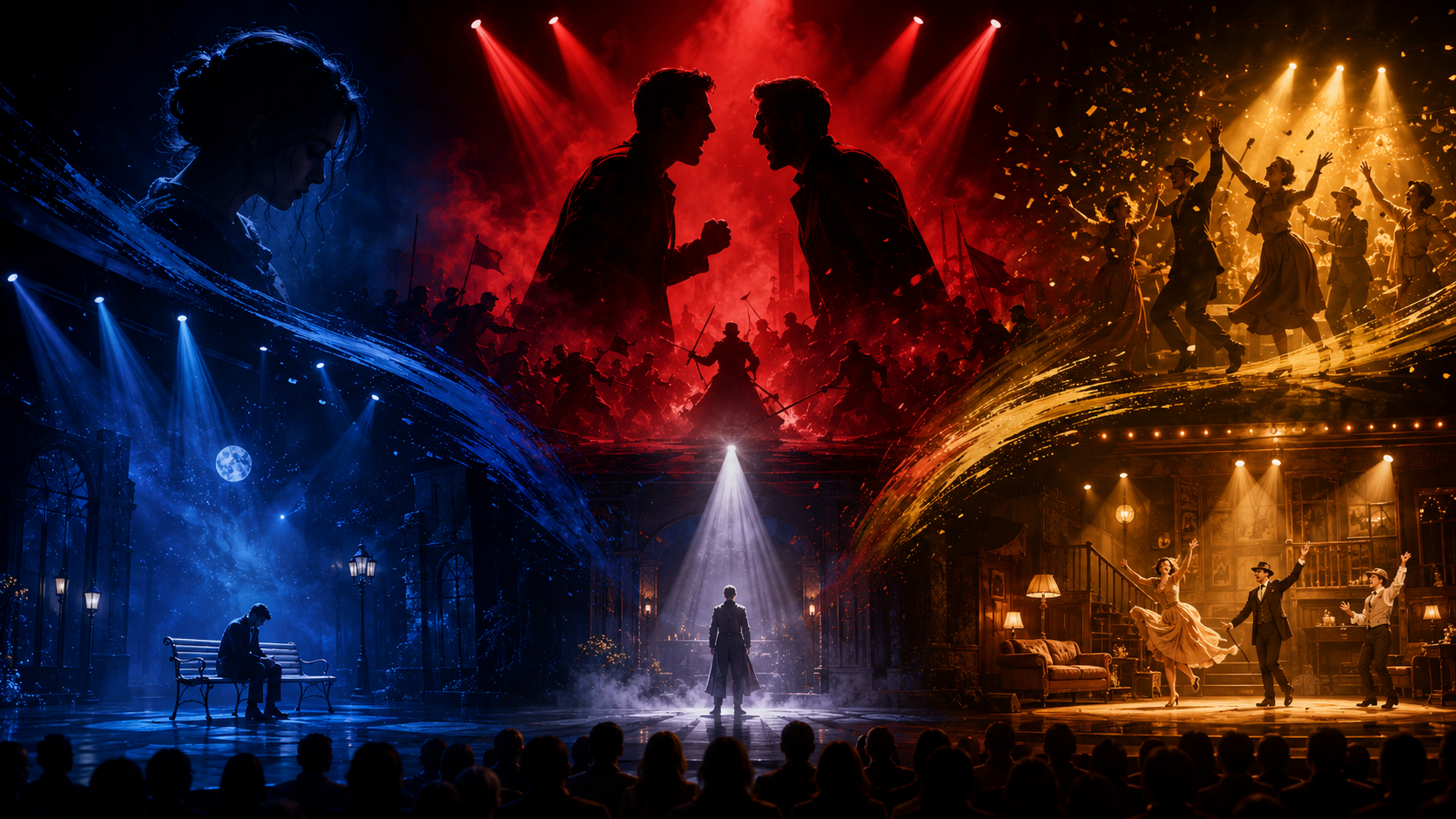
Stage lighting is one of the most powerful storytelling tools in modern theater, concerts, television productions, and live events. While audiences may focus on actors, music, or scenery, lighting silently guides emotions in the background. A carefully designed lighting scene can make viewers feel fear, happiness, suspense, romance, or sadness without a single word being spoken.
Light affects the human brain on both physiological and psychological levels. Colors influence heartbeat, brightness changes affect stress, and warm or cool tones alter emotional perception. Because of this, lighting designers are not only technicians—they are emotional architects.
In this article, we will explore three important aspects of lighting psychology:
Synesthetic Color Association – Why blue symbolizes sadness and red symbolizes conflict.
Brightness and Darkness Dynamics – How flashing or fading light controls psychological tension.
Warm and Cool Balance – Color templates for different dramatic genres such as tragedy and comedy.
By understanding these principles, stage designers can create more immersive and emotionally powerful performances.
1. Synesthetic Color Association: Why Blue Represents Sadness and Red Represents Conflict
1.1 What Is Color Psychology?
Color psychology studies how colors influence human emotions and behavior. Human brains naturally connect certain colors with emotional experiences because of biological instincts, cultural memory, and environmental association.
On stage, color becomes emotional shorthand. Audiences immediately understand emotional direction through lighting, even before actors speak.
For example:
Blue often suggests loneliness, distance, sadness, or calmness.
Red usually represents danger, passion, violence, or emotional conflict.
Yellow conveys optimism, energy, and warmth.
Green can symbolize nature, mystery, or even psychological imbalance depending on tone.
Purple is associated with fantasy, luxury, spirituality, or surrealism.
These associations are not random. They are connected to how humans evolved and how the brain processes visual information.
1.2 Why Blue Feels Sad
Blue lighting is commonly used in dramatic theater, emotional concerts, and cinematic stage productions because it creates emotional distance.
Physiological Reasons
Blue has a shorter wavelength and lower visual stimulation compared to warm colors like red or orange. This reduces psychological excitement and slows emotional activity.
Scientific studies show that blue environments can:
Lower heart rate
Reduce physical tension
Create feelings of isolation
Encourage introspection
This is why nighttime scenes are often illuminated with blue tones. Humans naturally associate blue with:
Night
Rain
Winter
Loneliness
Silence
When audiences see blue stage lighting, their brains unconsciously prepare for emotional seriousness or melancholy.
Practical Stage Applications
Blue lighting is frequently used in:
Tragic monologues
Breakup scenes
Emotional solos
Slow ballads
Dream sequences
For example, a single actor standing under a dim blue spotlight instantly creates emotional vulnerability.
1.3 Why Red Represents Conflict
If blue calms the mind, red energizes it.
Red has the longest visible wavelength and attracts human attention immediately. Evolutionarily, humans associate red with:
Blood
Fire
Danger
Survival
Aggression
Because of this biological history, red lighting increases emotional intensity and physical alertness.
Physiological Effects of Red Lighting
Red lighting can:
Increase heart rate
Raise blood pressure
Trigger adrenaline
Increase visual urgency
Create psychological pressure
This is why action scenes, battle performances, and dramatic confrontations often use strong red backlighting.
Red in Theater and Concerts
Red is extremely effective during:
Conflict scenes
Angry confrontations
Intense dance breaks
Rock concerts
Horror scenes
A stage suddenly flooded with red light immediately signals danger or emotional explosion.
1.4 Combining Colors for Emotional Complexity
Professional lighting designers rarely use a single color alone. Emotional complexity often comes from combining tones.
Examples include:
Blue + Purple = sadness mixed with fantasy
Red + White = violence and exposure
Amber + Pink = romance and nostalgia
Green + Blue = mystery and unease
Color transitions are equally important. A gradual change from warm amber to cold blue can visually represent emotional loss.
This emotional storytelling through color is one of the most sophisticated aspects of stage lighting design.
2. Brightness and Darkness Dynamics: Using Light Changes to Control Psychological Pressure
2.1 Why Brightness Influences Emotion
Humans instinctively react to changes in brightness. Sudden darkness creates uncertainty, while sudden brightness creates shock or revelation.
This reaction comes from survival instincts. In nature, darkness limits visibility and increases danger awareness.
Lighting designers use this psychological mechanism to control audience tension.
2.2 Slow Fading vs Sudden Blackouts
Different brightness transitions create different emotional effects.
Slow Fade-Out
A slow fade-out creates:
Reflection
Emotional softness
Calm endings
Nostalgia
It gives the audience time to emotionally process a scene.
This technique is common in:
Dramatic endings
Romantic theater
Emotional concerts
Memory sequences
Sudden Blackout
A sudden blackout creates:
Shock
Suspense
Fear
Anxiety
The human brain dislikes uncertainty. When the stage suddenly goes dark, audiences instinctively become alert.
This technique is widely used in:
Horror productions
Thriller scenes
Magic performances
Dramatic scene transitions
2.3 Flashing Lights and Psychological Stress
Fast flashing lights create excitement and tension because they overload visual processing.
Strobe effects can:
Increase adrenaline
Simulate chaos
Create disorientation
Intensify action sequences
Concerts frequently use synchronized strobe lighting during musical climaxes because it amplifies audience excitement.
However, excessive flashing can create fatigue or discomfort. Good lighting design balances stimulation with recovery.
2.4 Spotlight Isolation and Emotional Focus
A spotlight is one of the oldest psychological tools in theater.
When a single performer is isolated in light while the rest of the stage remains dark, audiences naturally focus attention and emotional empathy on that individual.
Spotlights create:
Emotional intimacy
Vulnerability
Authority
Isolation
The intensity of the spotlight also changes interpretation:
Soft spotlight = emotional sensitivity
Harsh spotlight = interrogation or exposure
This technique remains essential in both traditional theater and modern live productions.
2.5 Darkness as a Storytelling Tool
Many beginner designers focus only on adding light, but professional designers understand the power of darkness.
Darkness creates:
Mystery
Anticipation
Visual contrast
Emotional breathing space
Without darkness, lighting loses emotional impact.
Some of the most powerful moments in theater happen when almost nothing is visible.
Minimal light forces audiences to imagine, and imagination often creates stronger emotional reactions than complete visibility.
3. Warm and Cool Balance: Lighting Templates for Different Genres
3.1 Understanding Warm and Cool Tones
Lighting tones are generally divided into:
Warm colors
Cool colors
Warm Colors Include:
Red
Orange
Amber
Yellow
Warm tones create:
Energy
Comfort
Passion
Human connection
Cool Colors Include:
Blue
Cyan
Purple
White
Cool tones create:
Distance
Sadness
Mystery
Tension
Balancing these tones is crucial for theatrical storytelling.
3.2 Lighting Templates for Tragedy
Tragedy focuses on emotional pain, conflict, sacrifice, and psychological depth.
Common Tragedy Lighting Characteristics
Dominant Cool Tones
Blue and desaturated white are commonly used.
Low Saturation
Muted colors create realism and emotional heaviness.
Strong Shadows
High contrast lighting increases psychological drama.
Slow Transitions
Gradual fades allow emotional absorption.
Example Tragedy Color Palette
Deep blue backlight
Cold white side light
Dim purple atmosphere
Occasional red accents for conflict
This combination creates emotional isolation while maintaining dramatic tension.
3.3 Lighting Templates for Comedy
Comedy requires openness, rhythm, and emotional comfort.
Common Comedy Lighting Characteristics
Bright Warm Colors
Amber and yellow increase positivity.
High Brightness
Well-lit stages feel welcoming and energetic.
Fast Transitions
Quick lighting changes support comedic timing.
Reduced Shadow
Soft lighting keeps the atmosphere relaxed.
Example Comedy Color Palette
Warm amber front light
Golden wash lighting
Light pink accents
Bright white highlights
These colors help audiences feel relaxed and emotionally available for humor.
3.4 Musical Theater and Mixed Emotional Structures
Modern musicals often shift rapidly between comedy and tragedy.
Because of this, lighting systems must support dynamic emotional transitions.
For example:
Warm amber for joyful dance numbers
Sudden blue isolation during emotional solos
Red flashes during conflict scenes
White spotlight during emotional revelation
The speed and smoothness of these transitions directly affect audience immersion.
3.5 Cultural Differences in Color Perception
Although many emotional responses to color are biological, cultural interpretation also matters.
For example:
White symbolizes purity in some cultures but mourning in others.
Red may symbolize danger in Western theater but celebration in Chinese culture.
Purple can represent royalty or spirituality depending on region.
International productions must consider these cultural differences carefully.
The Future of Emotional Lighting Design
As technology advances, lighting psychology is becoming more sophisticated.
Modern systems now include:
AI-assisted emotional programming
Interactive audience-responsive lighting
XR-integrated virtual lighting
Intelligent color tracking
Real-time emotional synchronization with music
Future lighting design may even use biometric data such as heartbeat or facial recognition to adapt stage colors dynamically.
This means stage lighting will become even more emotionally personalized.
Conclusion
Stage lighting is far more than illumination. It is emotional communication.
Through color association, brightness control, and warm-cool balance, lighting designers influence how audiences think and feel throughout a performance.
Blue creates sadness because it slows emotional stimulation and reminds humans of isolation. Red creates conflict because it activates survival instincts and emotional urgency. Darkness creates tension because humans fear uncertainty. Warm colors encourage comfort, while cool colors create emotional distance.
By mastering these psychological principles, lighting designers transform performances into immersive emotional experiences.
In modern entertainment, audiences may forget individual lines or scenes, but they will always remember how the performance made them feel—and lighting plays a major role in creating that emotional memory.



Blue Sea Lighting is an enterprise with rich experience in the integration of industry and trade in stage lighting and stage special effects related equipment. Its products include moving head lights, par lights, wall washer lights, logo gobo projector lights, power distributor, stage effects such as electronic fireworks machines, snow machines, smoke bubble machines, and related accessories such as light clamps.
Quick Links
For more questions subscribe to our email